
Instrumental MUSIC
Instrumental Music
The Music Department at SPCPA provides rigorous, comprehensive training that develops musicianship, technique, creativity, collaboration, and individual artistic voice. Students work with teaching artists and professional musicians from varied backgrounds, giving them exposure to different musical traditions, disciplines, performance practices, and career pathways.
Our curriculum balances dedicated technical study with performance, composition, theory, ear training, music history, and creative exploration. Students learn not only how to perform music, but how music is constructed, how to listen critically, how to collaborate with other musicians, and how to develop their own identities as artists. From beginning study through advanced ensemble and composition work, students are challenged to become well rounded, independent musicians prepared to create, perform, respond, and connect.
The Working Musician
Students investigate what it means to build and sustain a professional life in music. Topics may include auditions, gigs, contracts, collaboration, networking, professional communication, portfolios and promotional materials, copyright, basic music business practices, multiple income streams, and the many career pathways available to today’s musicians.
Survey of Rock-n-Roll
Students explore the musical, cultural, and historical development of rock and roll and the artists and communities that shaped it. Through critical listening, discussion, research, and musical analysis, students examine changing styles, influential recordings, performance practices, technology, and the relationship between popular music and the broader culture in which it developed.
Artist Identity Through Music
Students investigate the question: Who am I as a musician? Through listening, research, performance, experimentation, reflection, and original creative work, students identify the musical influences, experiences, values, sounds, and ideas that contribute to their emerging artistic identities. The course encourages students to move beyond imitation and begin making intentional choices that sound and feel authentically their own.
Ensemble I, II & III | Composition
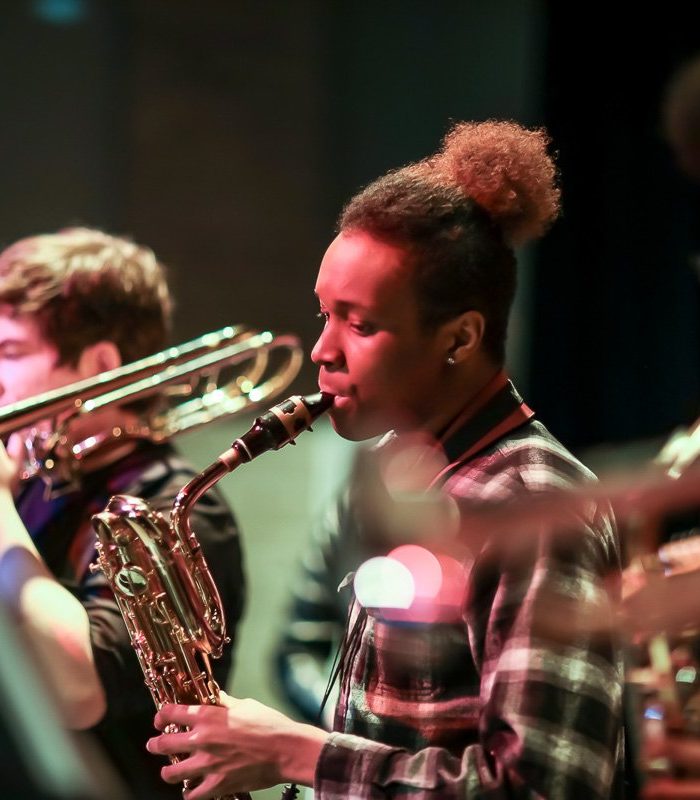
Students build the essential skills of ensemble musicianship through rehearsal and performance. Emphasis is placed on technique, listening, rhythm, musicality, preparation, communication, and responding to other musicians in real time. Students develop the discipline and collaborative habits necessary to contribute confidently to an ensemble.
Theory I | Ear Training
Students develop the foundational language and listening skills necessary for strong musicianship. Study includes notation, rhythm, scales, intervals, key signatures, chords, harmonic relationships, sight reading, aural recognition, and analytical listening. Students learn to connect what they see on the page with what they hear and perform.
Theory II | Ear Training
Students build upon foundational music theory and aural skills through more advanced study of harmony, chord progressions, scales, intervals, rhythm, form, analysis, sight singing, dictation, and musical structure. Students strengthen the connection between what they see, hear, perform, and create, developing greater fluency and independence as musicians. Through written work, critical listening, keyboard application, and practical exercises, students learn to recognize and apply increasingly complex musical concepts in performance, composition, and arrangement.
Songcraft | Music & Arrangement
In collaboration with Creative Writing for the Singer/Songwriter, this interdisciplinary course brings musicians and writers together to develop original songs from initial concept through performance. Students explore melody, harmony, rhythm, form, accompaniment, arrangement, musical texture, and interpretation while their collaborators investigate lyric, imagery, voice, structure, and storytelling.
Students learn how words and music influence one another and how collaboration can transform an initial idea into a fully realized song. The process emphasizes listening, revision, communication, musicianship, and respect for each artist’s contribution to the finished work.
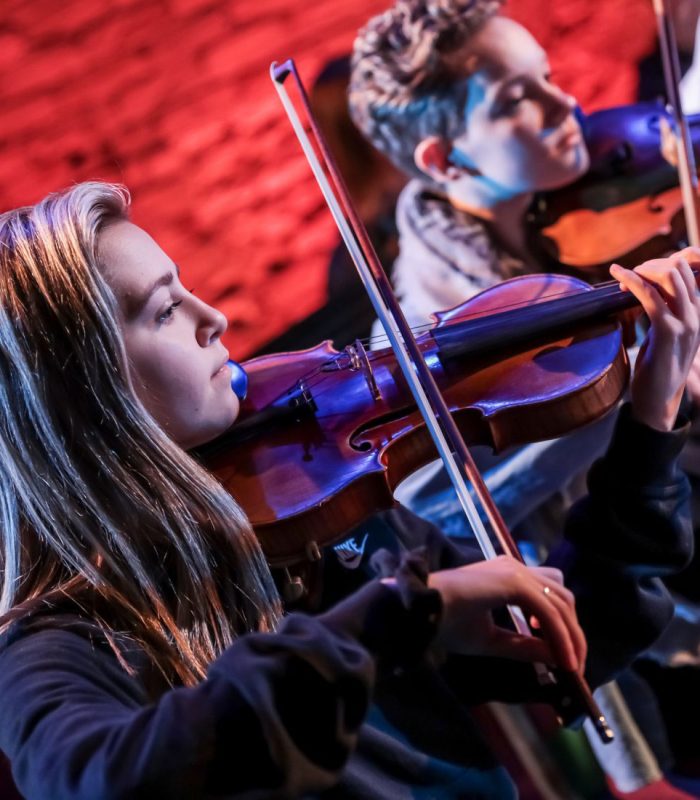
Our after school club: Chamber Orchestra is offered for those students who play a traditional orchestral instrument. Students will engage with music from both the classical and contemporary chamber music repertoire.
Instrumental Music Faculty
| Paul Fonfara Instrumental Music | fonfarap@spcpa.org |
| Chris Hepola Instrumental Music | hepolac@spcpa.org |
| Curtis Thompson Instrumental Music | thompsonc@spcpa.org |